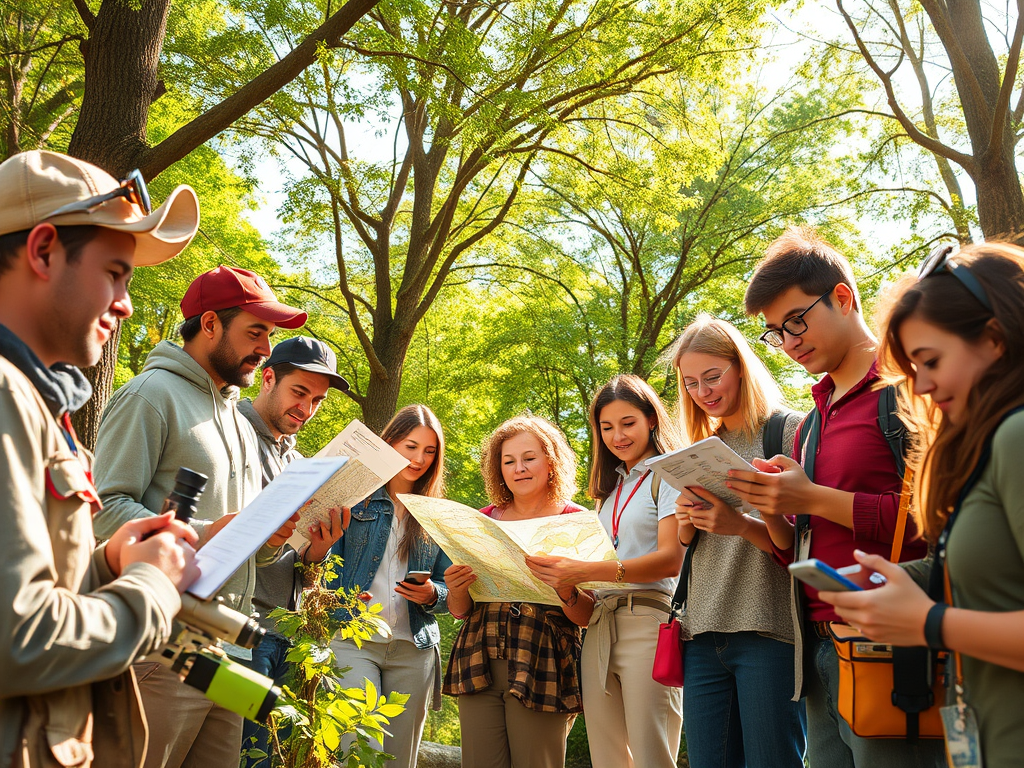
No doubt many of you have heard something about citizen science? What is it and how does this differ from volunteered geographic information?
Citizen Science: Citizen Science actively involves the public in scientific research activities and the process. How they participate can vary. Citizens can collaborate with scientists by collecting data or analysing data, for example.
Examples:
- Birdwatching when coupled with citizen science can help create more complete bird distribution maps. Some examples include eBird or the Great Backyard Bird Count. These help provide scientists with real-time, global data that can be used to help conservation efforts for birds and important habitats.
Volunteered Geographic Information (VGI): is geospatial data that is collected, created and shared by individuals and citizens rather than professional organizations. With the advancement of technological devices and the web, the ability to collect and share information via mobile devices has made it easy to collect data. Examples include:
Examples:
- OpenStreetMap – crowdsourced maps capturing a variety of information. https://www.openstreetmap.org
- Where is George? – recording the movement of the one dollar bill in the US by capturing the postcode of where a person traveled from and to. https://www.wheresgeorge.com/wild.php
- Hummingbird Migration – crowdsourced information capturing the timing of the migration of the hummingbird along eastern US and Canada. https://www.hummingbirdcentral.com/hummingbird-migration-spring-2025-map.htm
Citizen Science involves an active collaboration with the citizen while VGI is passive and voluntary. Both are useful! When coupled with geographic information and/or data and spatial analysis, can lead to further scientific discoveries and help us understand the world in which we live.
Ready to start contributing data?
Sources:
- Where’s George. https://www.wheresgeorge.com/wild.php
- Hufnagel, L., D. Brockmann, and T. Geisel. Forecast and control of epidemics in a globalized world, in Proc Natl Acad Sci USA. 2004. pp. 15124–15129.
- Brockmann, D., L. Hufnagel, and T. Geisel. The scaling laws of human travel, in Nature. 2006. pp. 462–465
- Brockmann, D. The origin of wheresgeorge research. https://rocs.northwestern.edu/research/wgstory_assets/WGstory.pdf
© 2023-present GeoSpatialSense. All Rights Reserved

 GeoSpatialSense